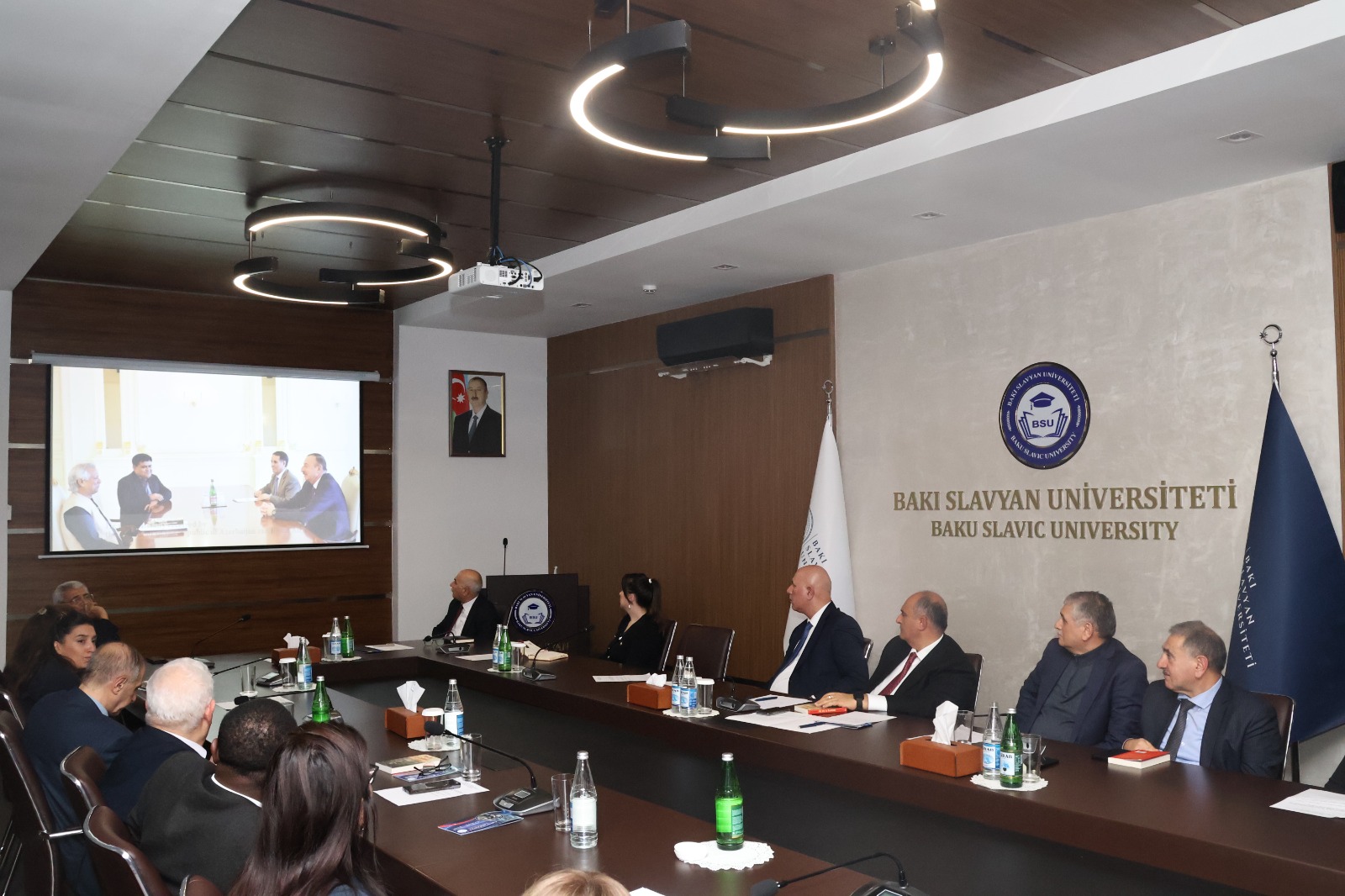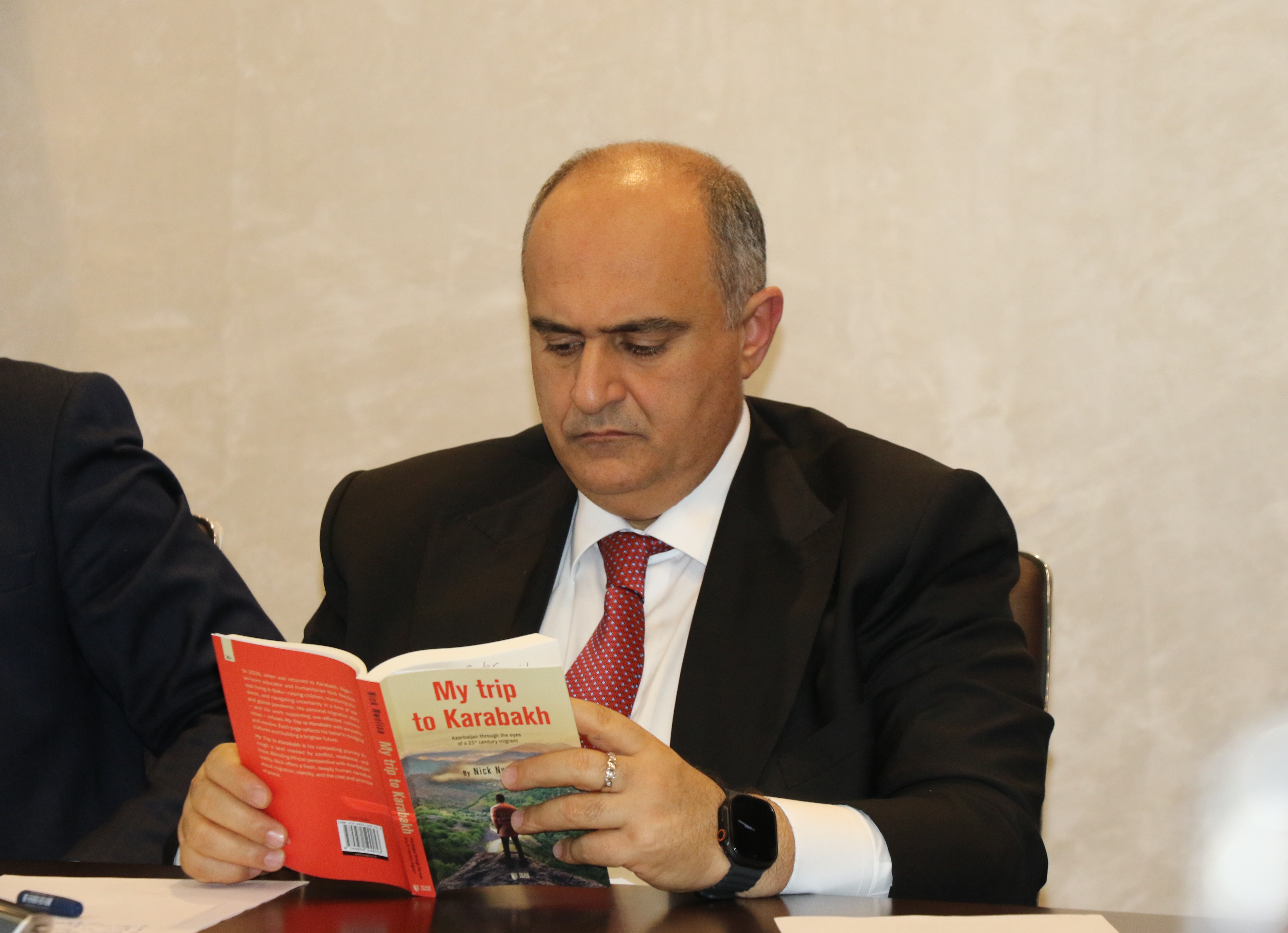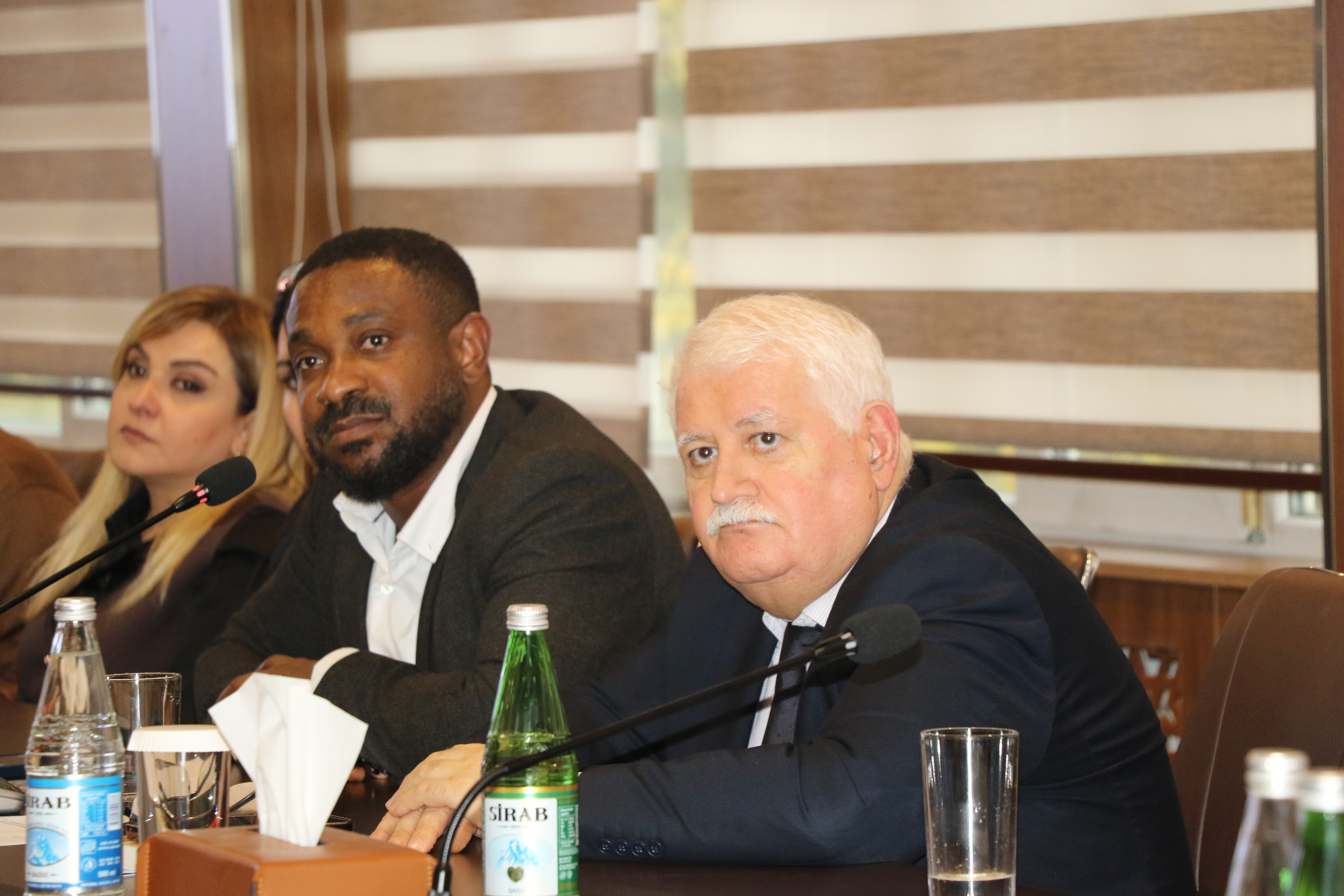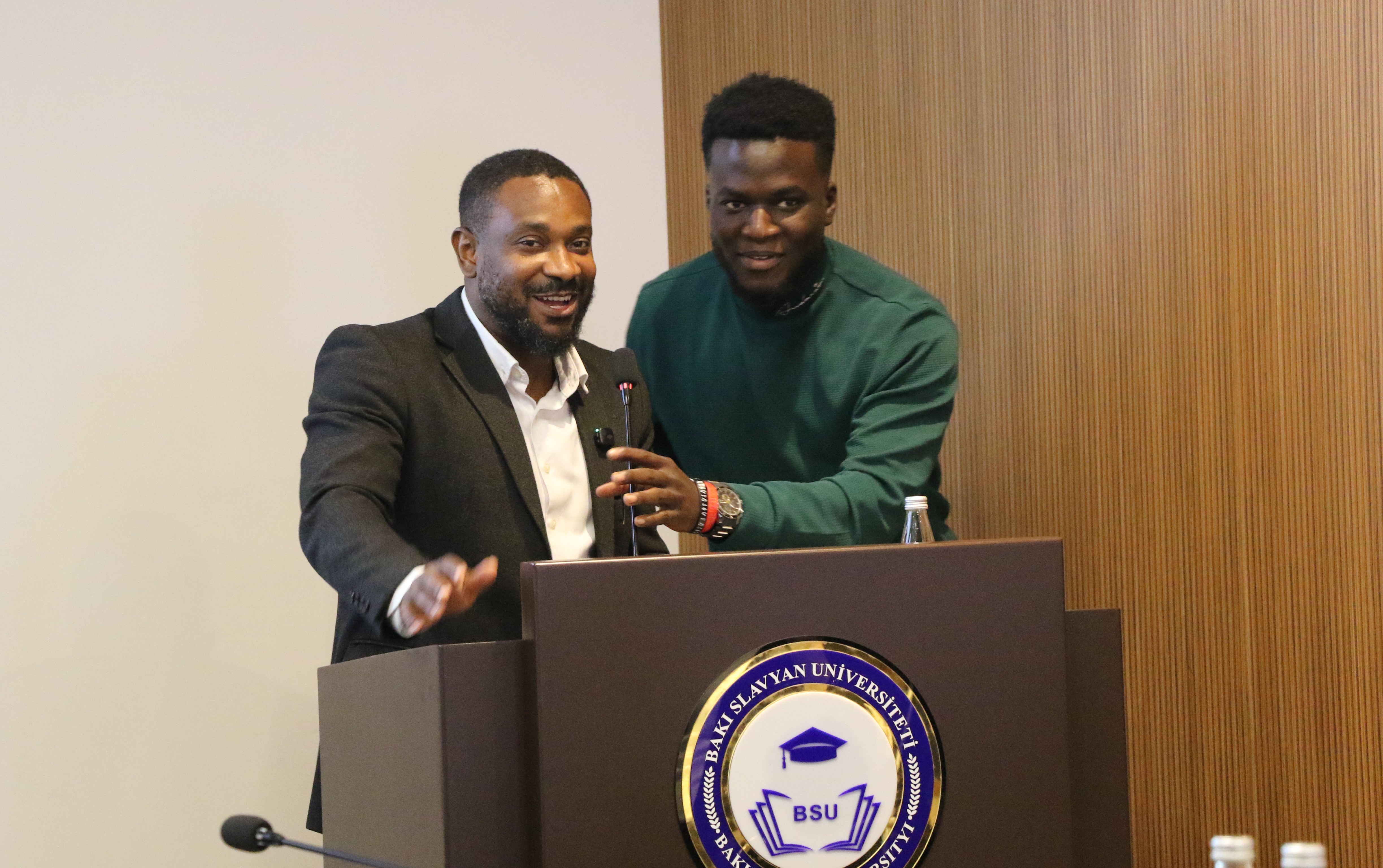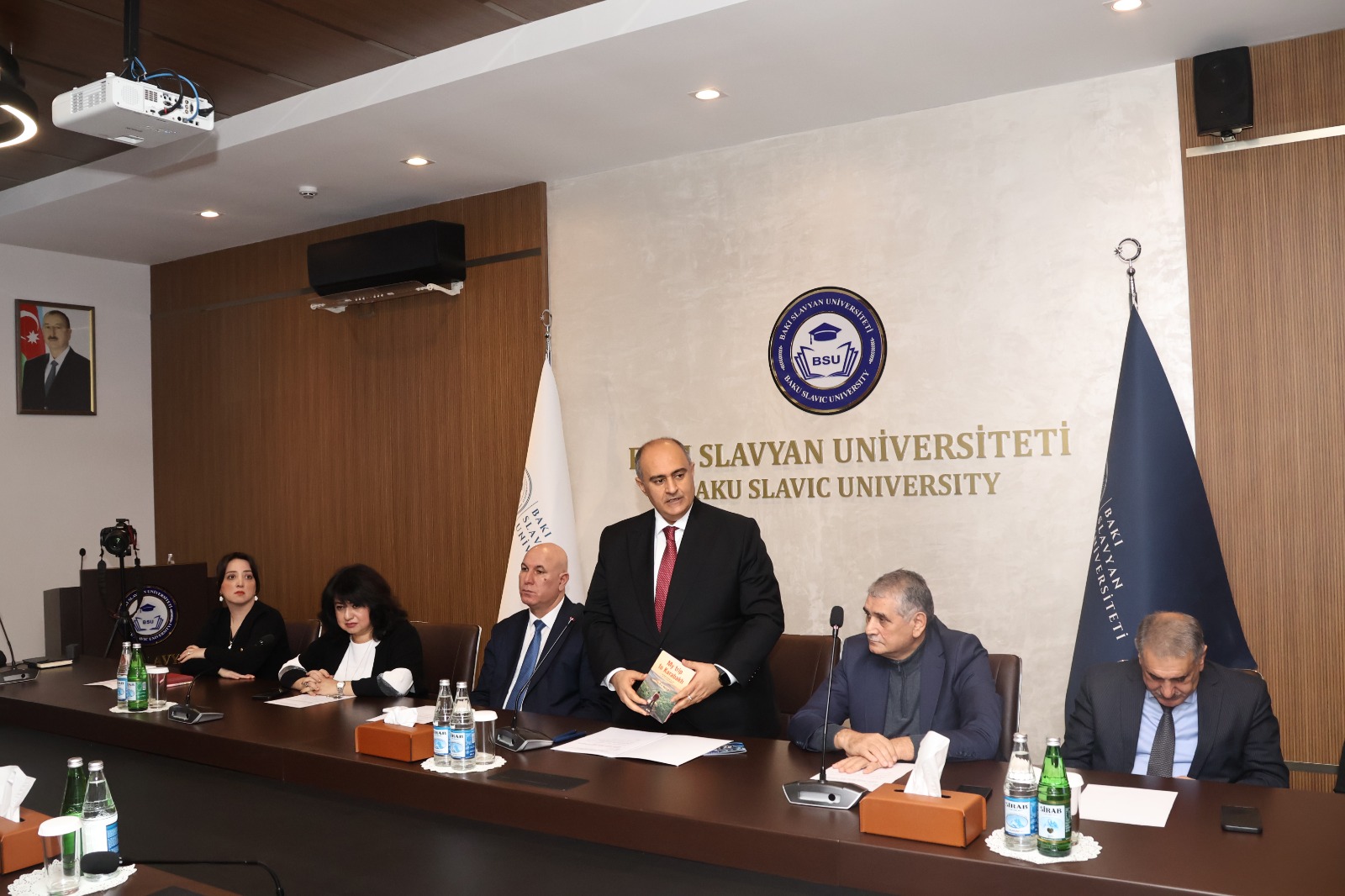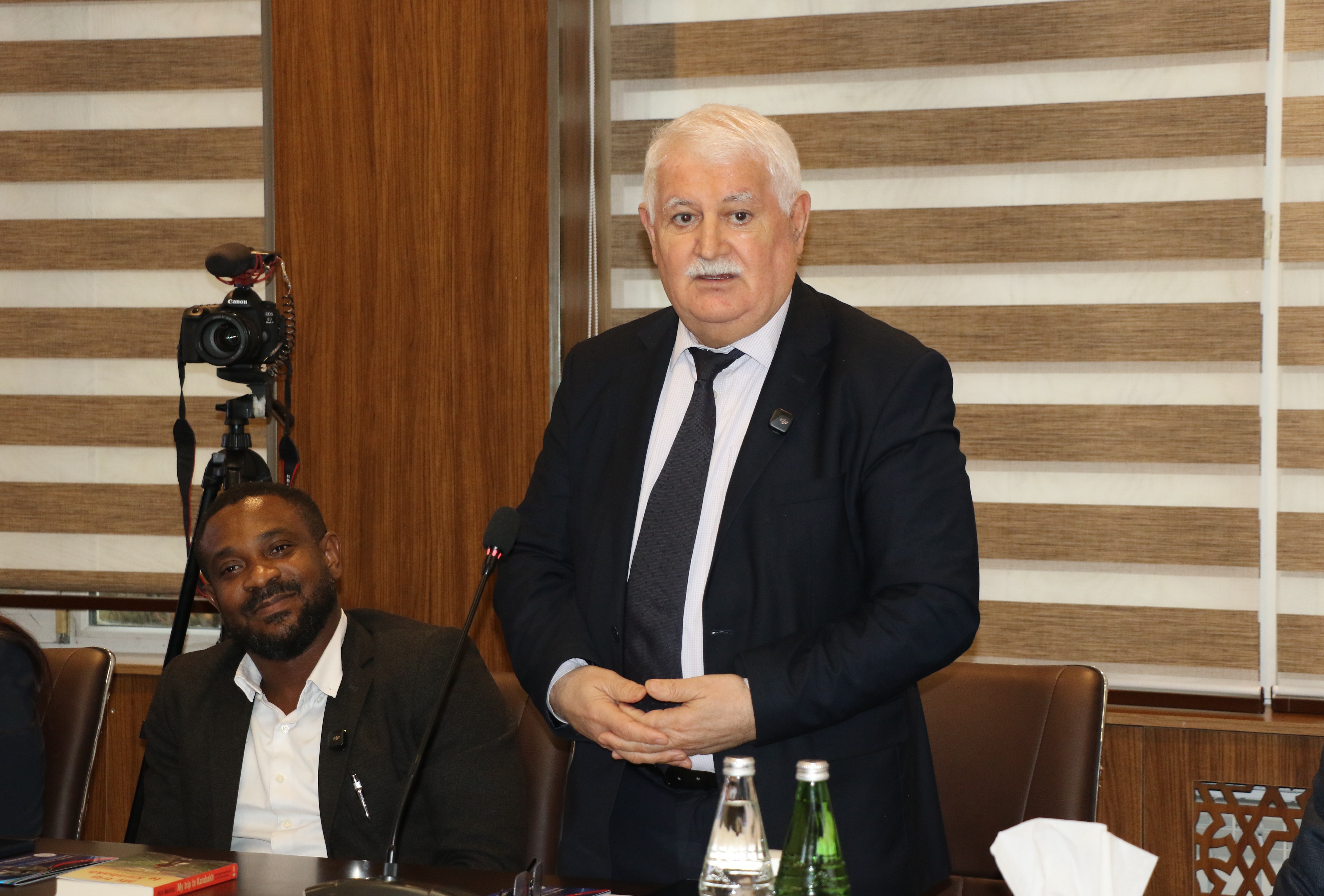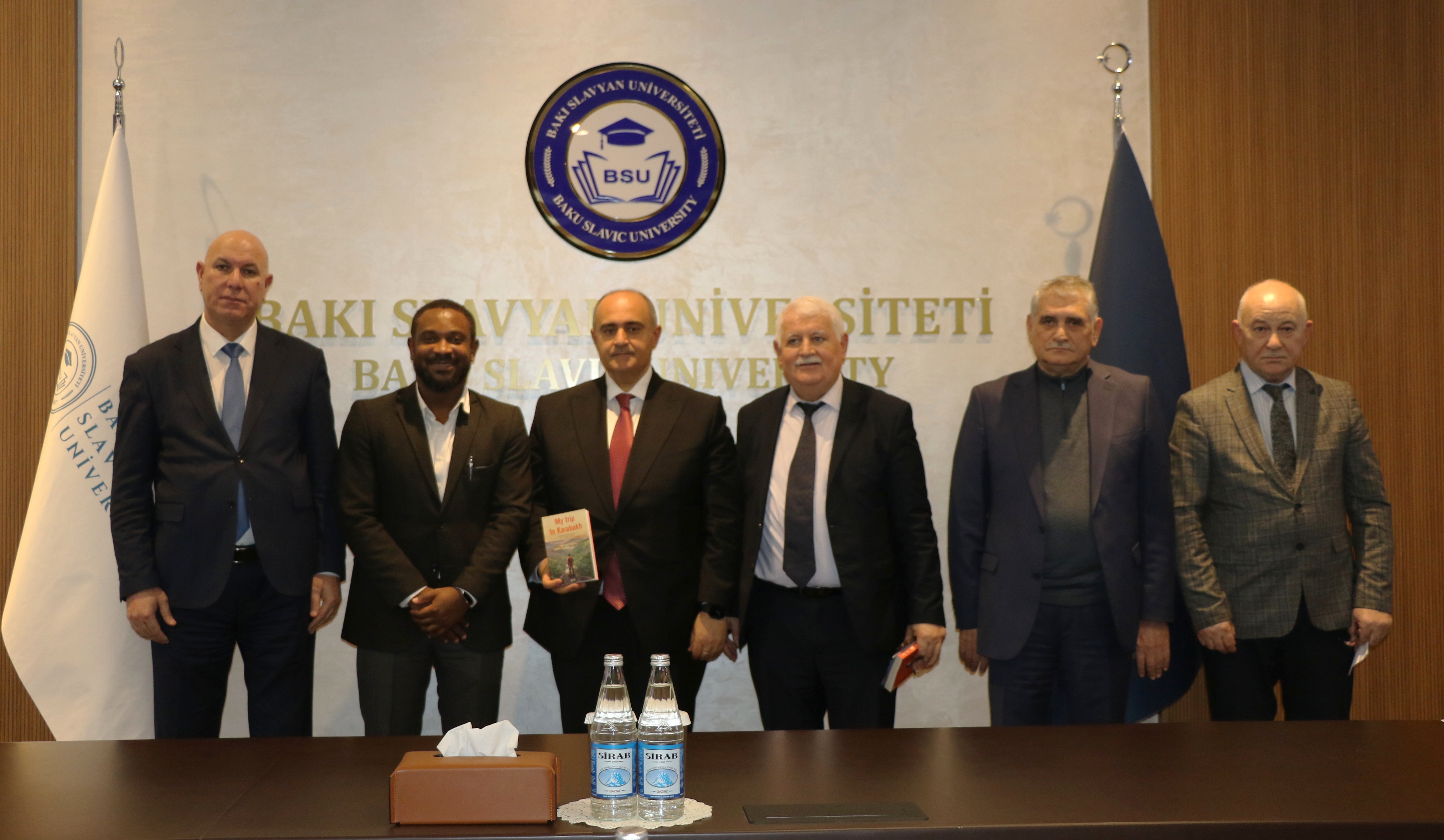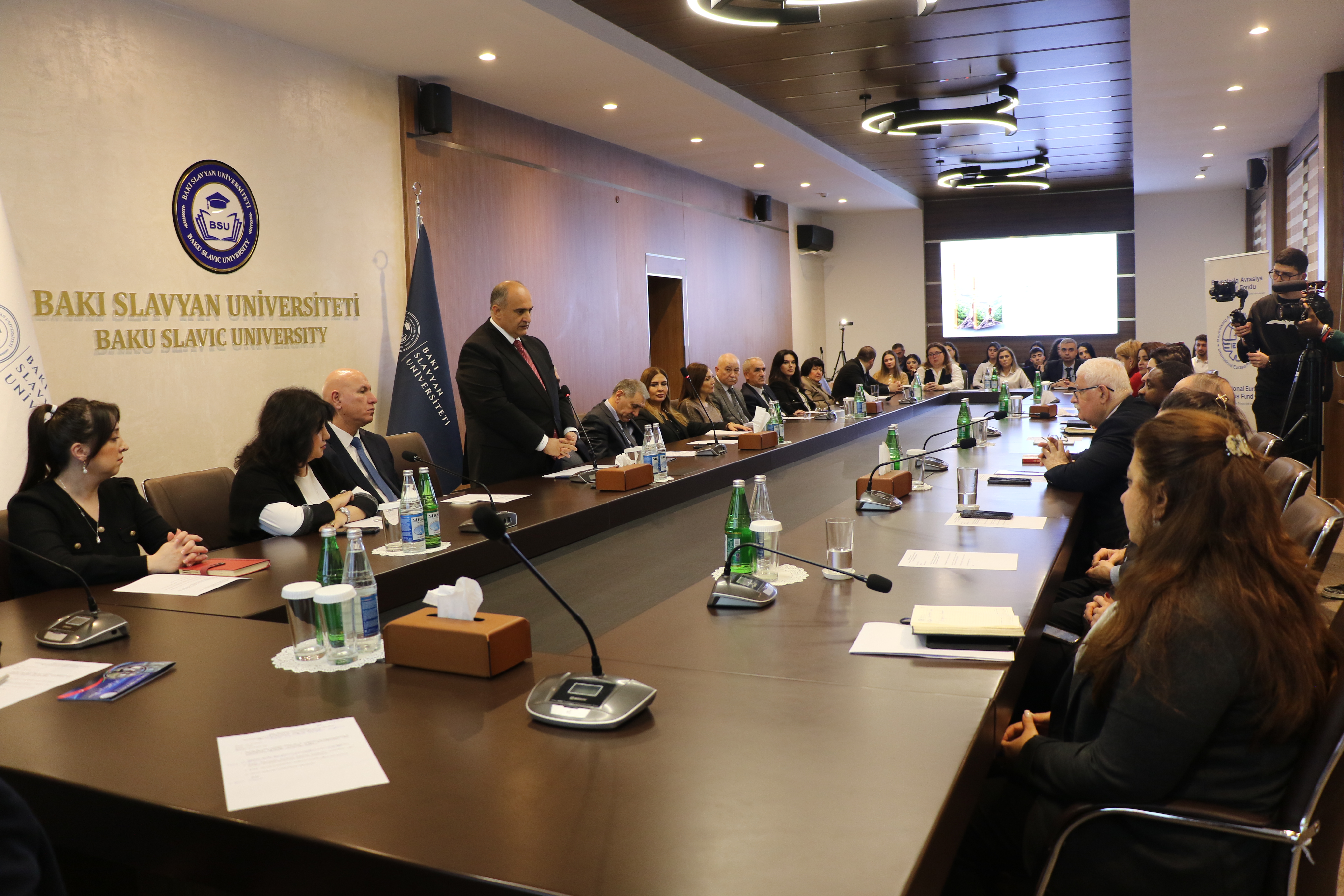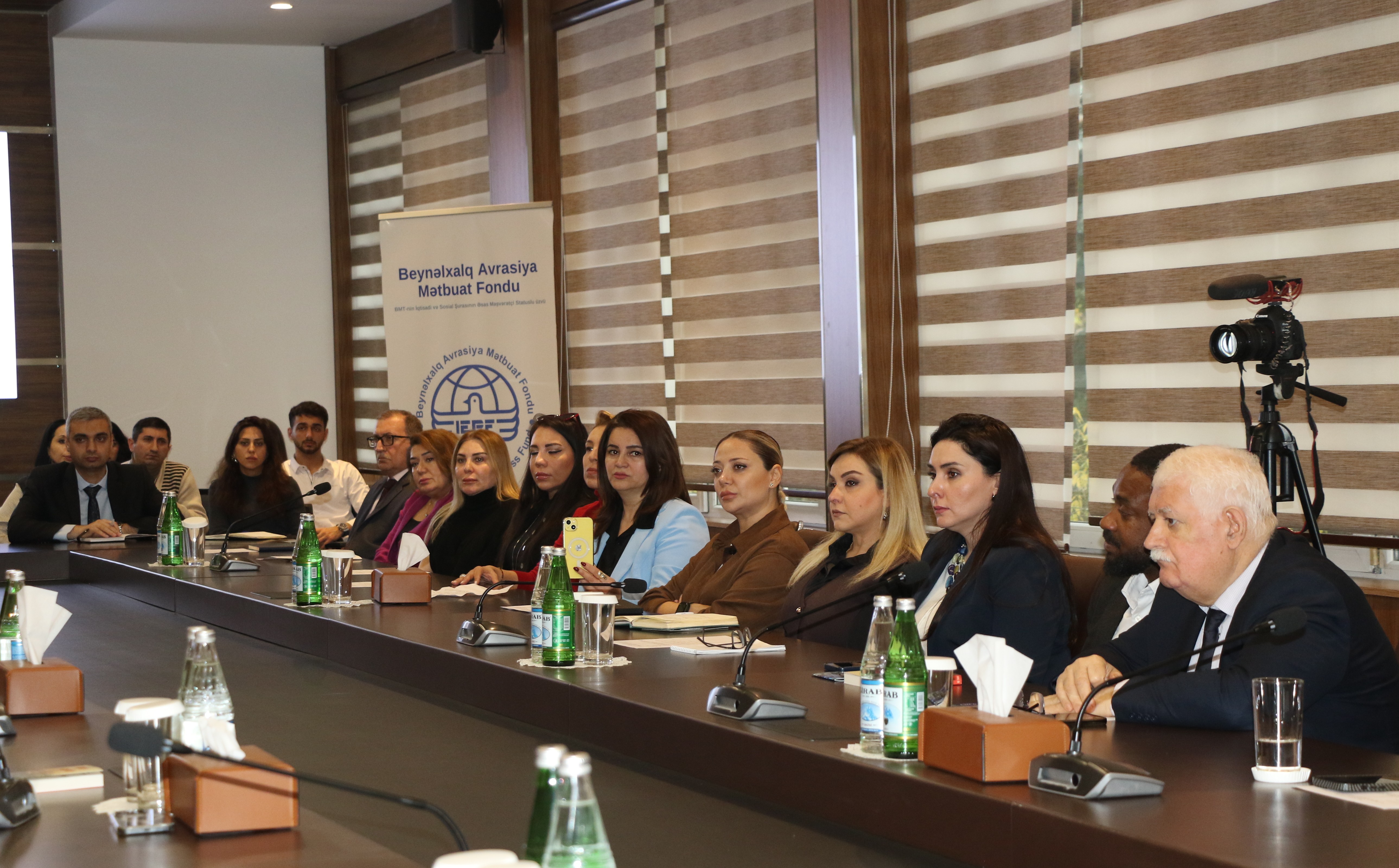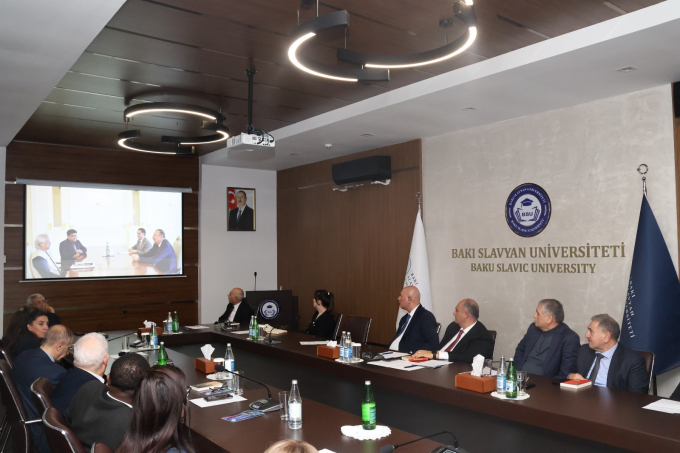
Today, Baku Slavic University (BSU) hosted the presentation of the book “My Trip to Karabakh” by former employee of the International Eurasia Press Fund (IEPF), writer, and researcher-lecturer Nick Nwolisa. The event was organized within the framework of the “Year of the Constitution and Sovereignty.”
The ceremony opened with a welcoming speech by Rector of Baku Slavic University, Anar Naghiyev. The rector shared his thoughts about the author and highlighted the conceptual basis and content of the book. He commended the fact that a foreign citizen chose to address such a sensitive and significant topic, documenting his impressions of his visit to Karabakh. Naghiyev emphasized that, in the context of Azerbaijan’s 30-year struggle and the restoration of the liberated territories, this publication holds considerable importance. He also noted the symbolic significance of holding the event on the eve of the National Leader Heydar Aliyev’s memorial day. The rector proposed that the book be considered as a teaching resource for secondary schools.
In his remarks, President of the IEPF, Umud Mirzayev, spoke about how Nick Nwolisa became connected with the organization: “Our foundation prioritizes working with foreign students. We established the Baku International Student Group and have held their international forums three times. During an event dedicated to the Khojaly genocide, Nick’s speech caught my attention. We spoke afterwards, and from that moment, he began volunteering with the foundation.”
Mirzayev added that Nwolisa later pursued his studies at the Faculty of Journalism of Baku Slavic University and has consistently distinguished himself through his principled stance on sensitive issues concerning Azerbaijan.
Addressing the audience, the author, Nick Nwolisa, spoke about the motivations behind writing “My Trip to Karabakh.” He stated that he had observed numerous distortions in foreign media coverage of the Karabakh war, which led him to witness the events personally and record his experiences. He noted that the devastation he saw in Karabakh, the suffering endured by the local population, and the sight of the tulip— which he regarded as a symbol of nature— left profound and lasting impressions on him. Nwolisa added that the book aims both to convey the truth and to reflect the reconstruction efforts undertaken by Azerbaijan in the region.
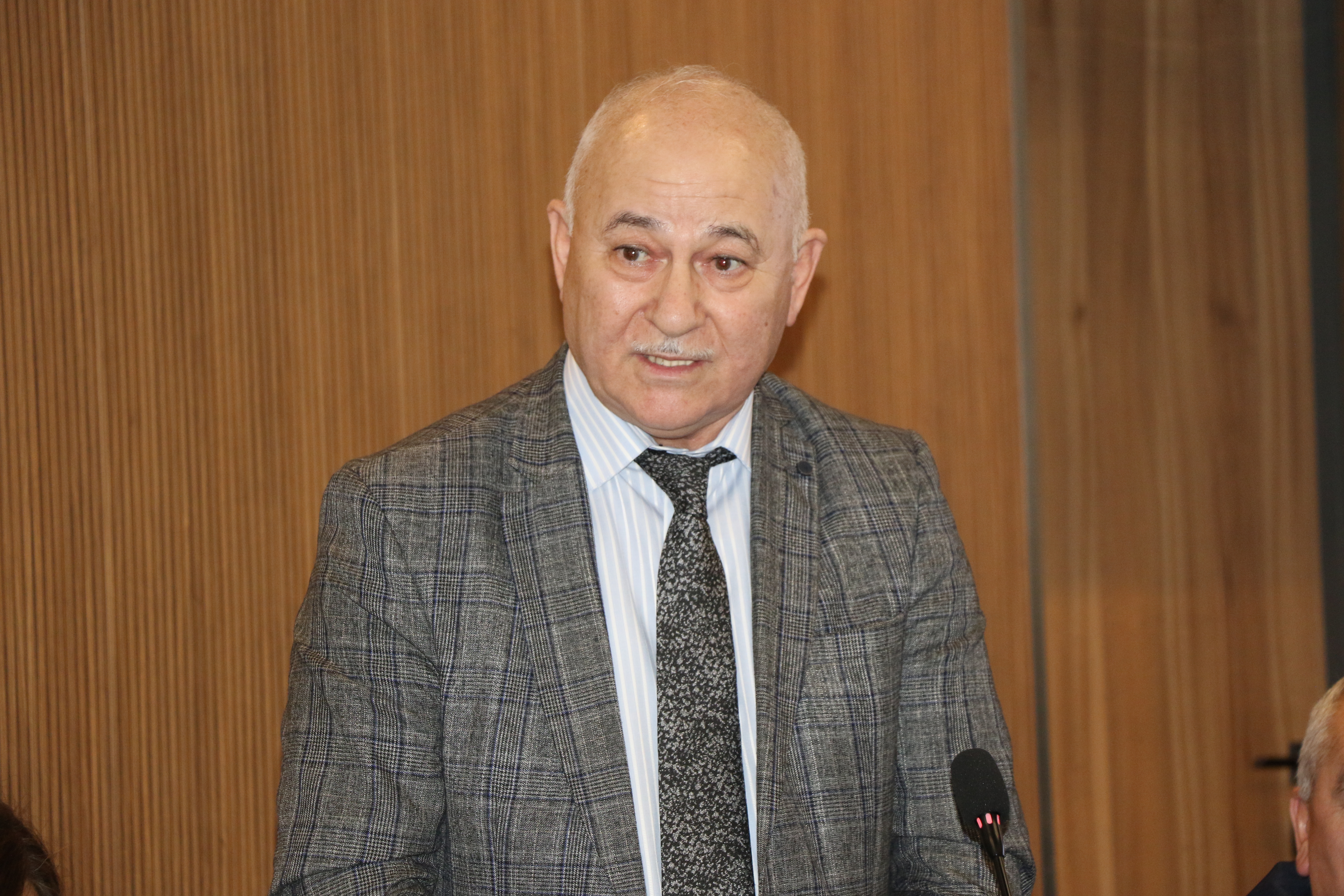
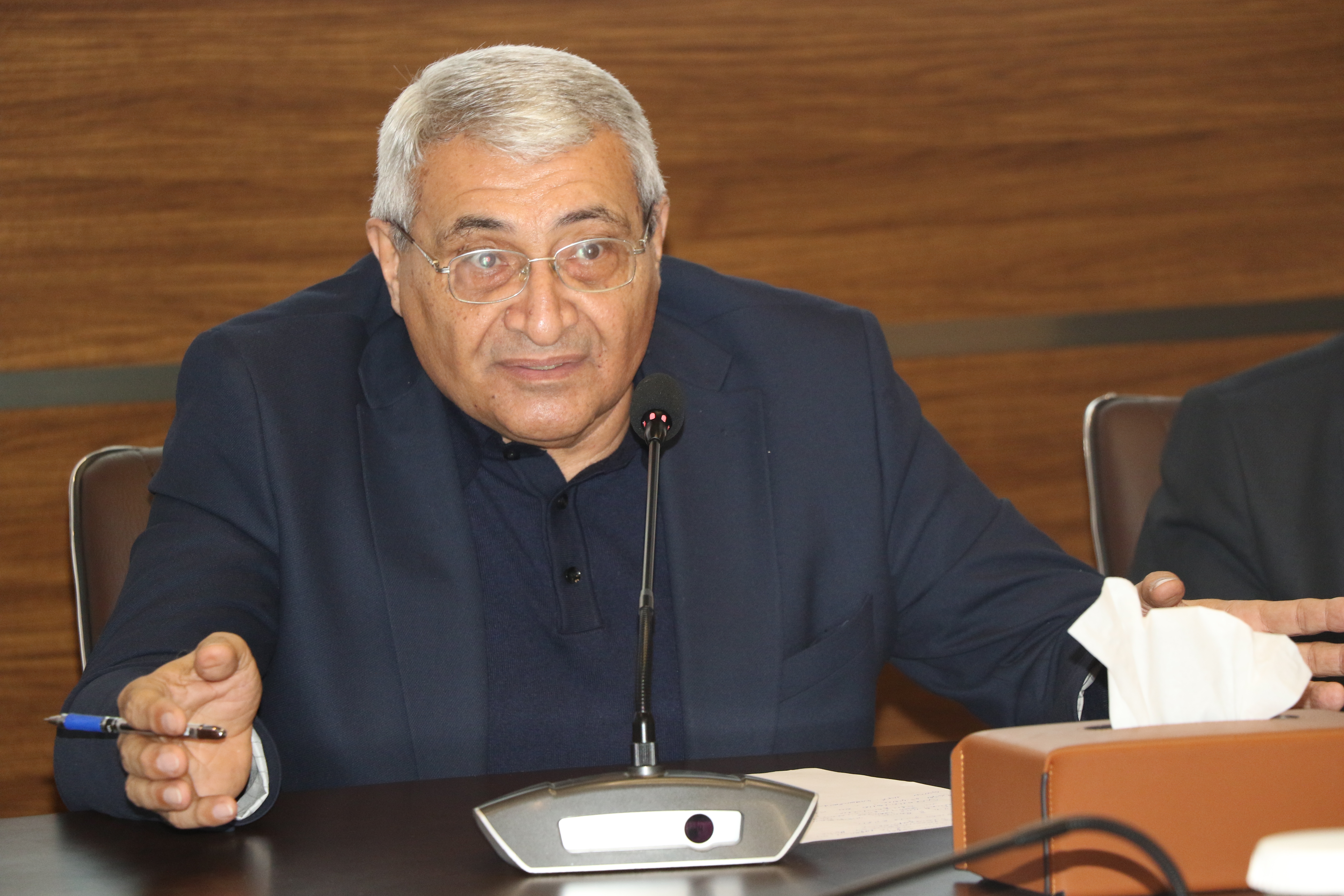
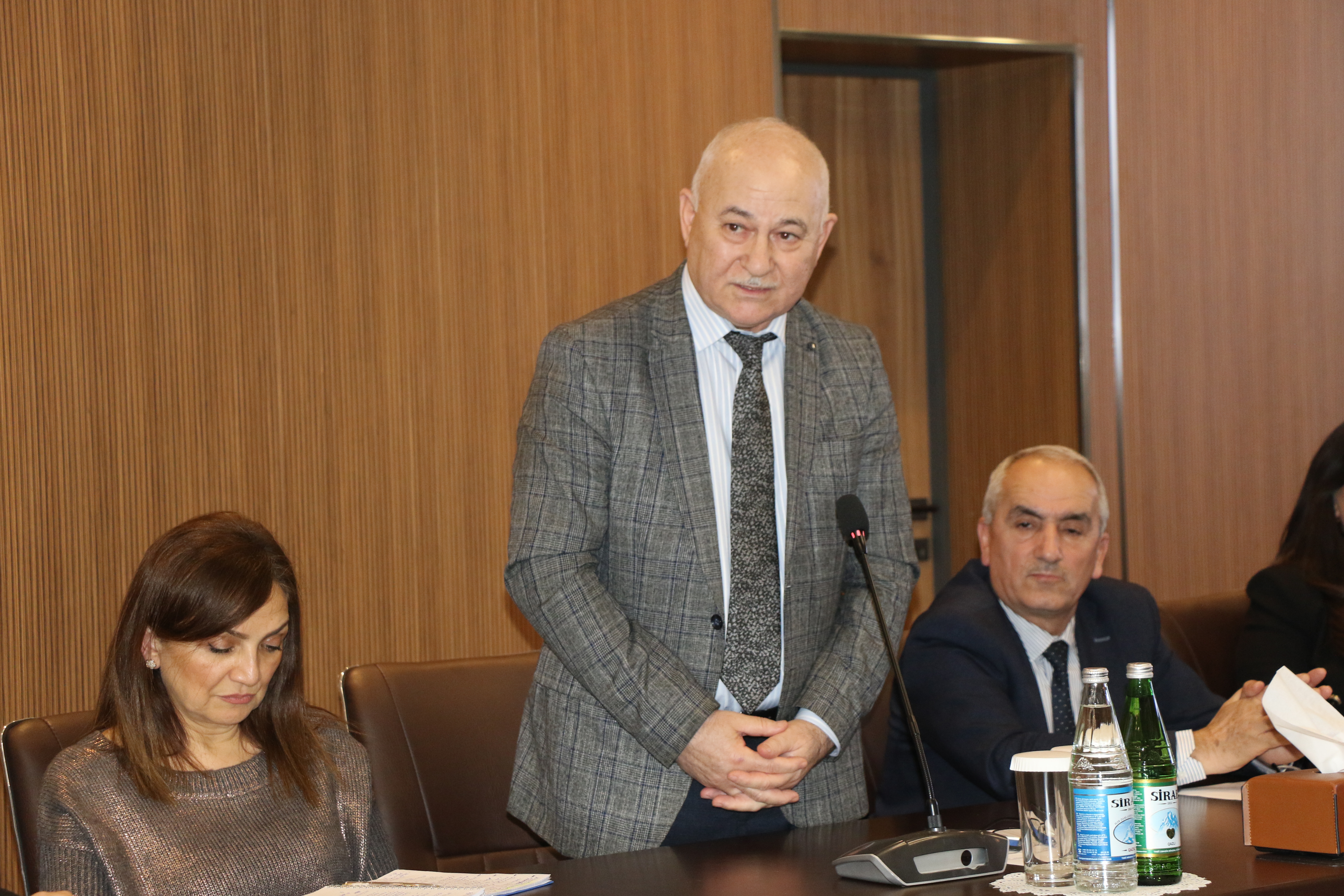
During the event, Professor Telman Jafarov of the Department of Russian Literature, Pirali Aliyev, Head of the Department of Pedagogy and Psychology, and Doctor of Philosophy Asgar Ahmad delivered speeches. They emphasized that the book carries not only literary and journalistic value but also ideological and educational significance. They noted that presenting the realities of Karabakh through the perspective of a foreign author is important for influencing international audiences and ensuring objectivity. It was also highlighted that such works contribute not only to preserving historical memory but also to strengthening Azerbaijan’s position in the information sphere.
The event continued with a video presentation reflecting IEPF’s 33 years of activity.
The program concluded with an exchange of views between the author and participants, followed by a question-and-answer session.